Implant Site Bone
Height, width, and density of jaw bone before placement

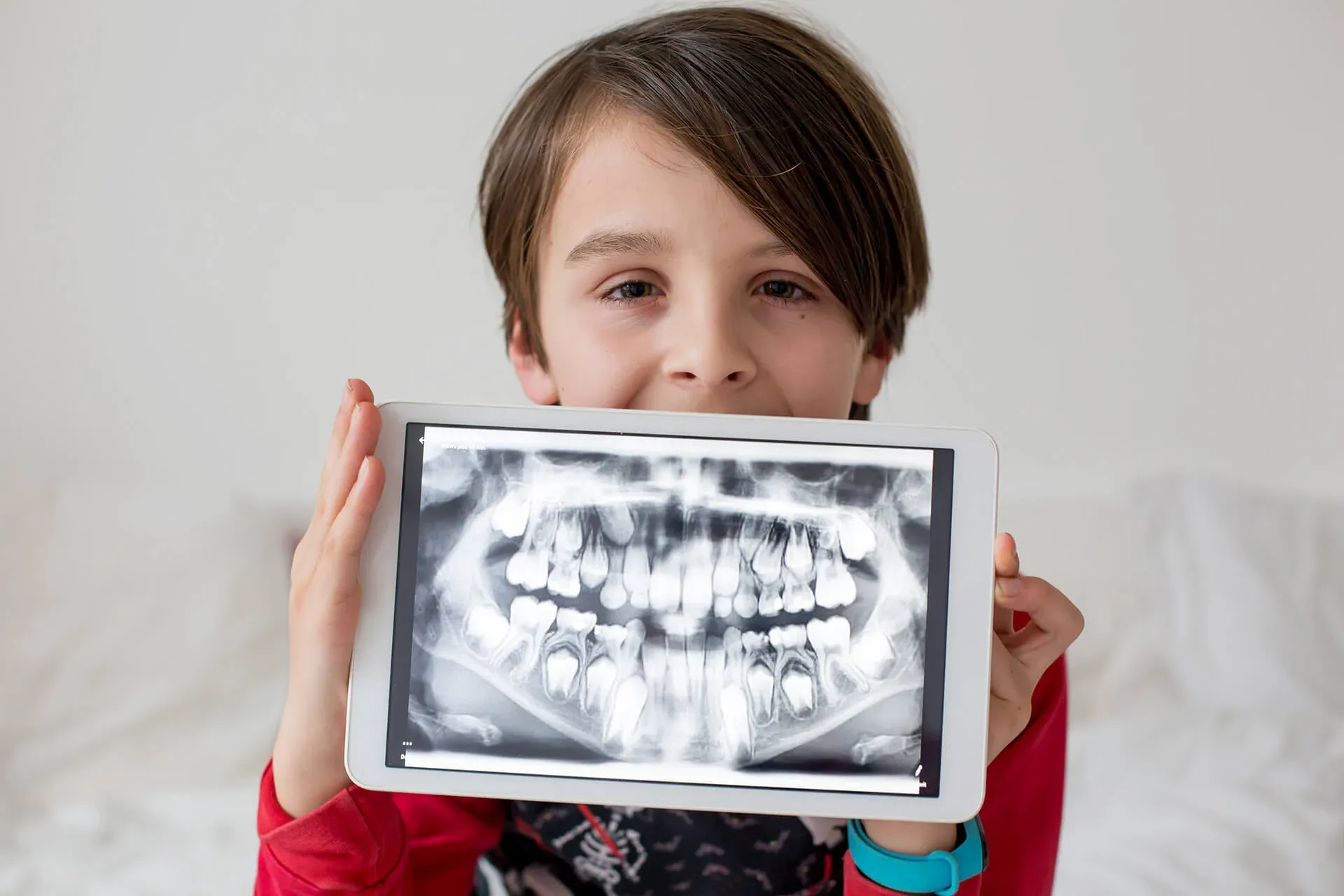
Cone-Beam Computed Tomography gives Dr. Cook a true 3D view of your jaw, sinuses, and nerves for safer, more precise care.
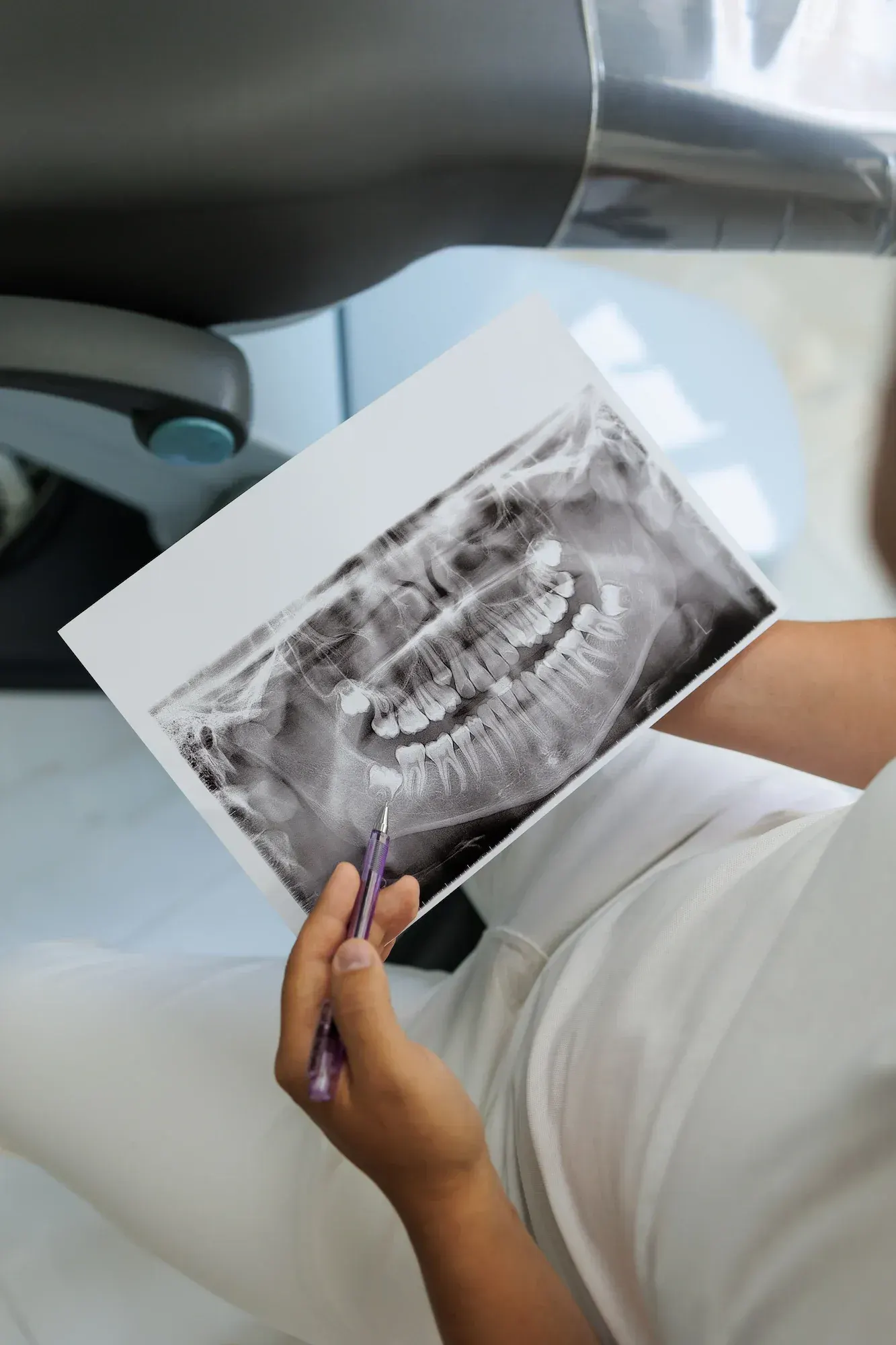
CBCT reveals what flat X-rays miss so Dr. Cook can plan with confidence.
Traditional dental X-rays compress your three-dimensional anatomy into a flat image, which can hide bone defects, root fractures, and nerve pathways that matter for safe treatment. A CBCT scan rotates around your head one time and reconstructs hundreds of slices into a true 3D model of your teeth, jaw, sinuses, and surrounding structures. Dr. Cook can rotate, slice, and measure the volume on screen, turning guesswork into precision for implants, extractions, and root canals.
At Cook Family Dentistry, our in-office CBCT scanner is positioned in a comfortable upright unit. The arm rotates around your head for roughly 15 to 40 seconds, and the image appears on the chairside monitor moments later. Because the scan is focused on the dental region, the radiation dose is far lower than a hospital medical CT, while still giving Dr. Cook the detail needed to place implants beside critical nerves and sinus floors with millimeter accuracy.
Good to Know
Cone-Beam Computed Tomography is a fast, focused 3D scan of your teeth and jaws.
Cone-Beam Computed Tomography (CBCT) is a specialized type of X-ray that captures a three-dimensional image of your teeth, jaw, sinuses, airway, and nerve pathways in a single rotation. Unlike a flat dental X-ray, a CBCT scan produces hundreds of thin image slices that software stitches into a true 3D model Dr. Cook can rotate, measure, and explore on screen.
The scanner uses a cone-shaped X-ray beam that rotates roughly 360 degrees around your head while you sit or stand upright in the unit. The entire scan takes about 15 to 40 seconds. Because the field of view is focused on the dental region, the radiation dose is significantly lower than a medical CT scan of the head, though it is higher than a single 2D dental X-ray. Dr. Cook only orders a CBCT when the diagnostic value clearly justifies the dose, following the ALARA principle (As Low As Reasonably Achievable).
CBCT is essential for cases that demand precise 3D information, including:
A CBCT scan takes just 15 to 40 seconds in a single rotation. Here's what to expect from check-in to reviewing your 3D images chairside.
3D imaging guides accurate diagnosis and safer surgical planning.
Height, width, and density of jaw bone before placement
Position of the inferior alveolar nerve before surgery
Sinus floor height for upper jaw implants and grafts
Missed or curved canals invisible on 2D X-rays
Vertical and oblique cracks beneath the gumline
Airway volume and TMJ anatomy for sleep and jaw care
CBCT 3D imaging at Cook Family Dentistry gives Dr. Cook a complete volumetric view of your teeth, jaw, sinuses, and nerves - enabling safer surgery, more precise implant placement, and fewer surprises during treatment.






See bone, nerves, and sinuses from any angle
Precise planning around critical structures
Focused dental field reduces unnecessary exposure
Scan and review in under 15 minutes chairside
Fewer surgical complications and revisions
Securely sent to specialists when collaboration is needed
Comparing CBCT 3D scans, standard digital X-rays, and panoramic imaging so you understand when each tool provides the best diagnostic value for your care.
| Imaging Option | Image Type | Best Used For | Scan Time | Radiation Dose | Diagnostic Detail | Average Cost |
|---|---|---|---|---|---|---|
| CBCT 3D Scan (Cook Family Dentistry) | True 3D volumetric view | Implants, surgery, airway, complex canals | 15 - 40 sec | Higher than 2D, far below medical CT | Bone, nerves, sinuses in 3D | ~$300–$500, often bundled |
| 2D Digital X-Ray | Flat 2D image | Cavities, bitewings, periapical exams | <1 sec/image | Lowest, 70 - 90% less than film | Cavities, bone levels, root tips | ~$25–$90/series |
| Panoramic X-Ray | Flat 2D overview | Overview, wisdom teeth, ortho planning | ~15 sec | Low, just above a bitewing | Wide 2D view, no fine 3D detail | ~$100–$150 |
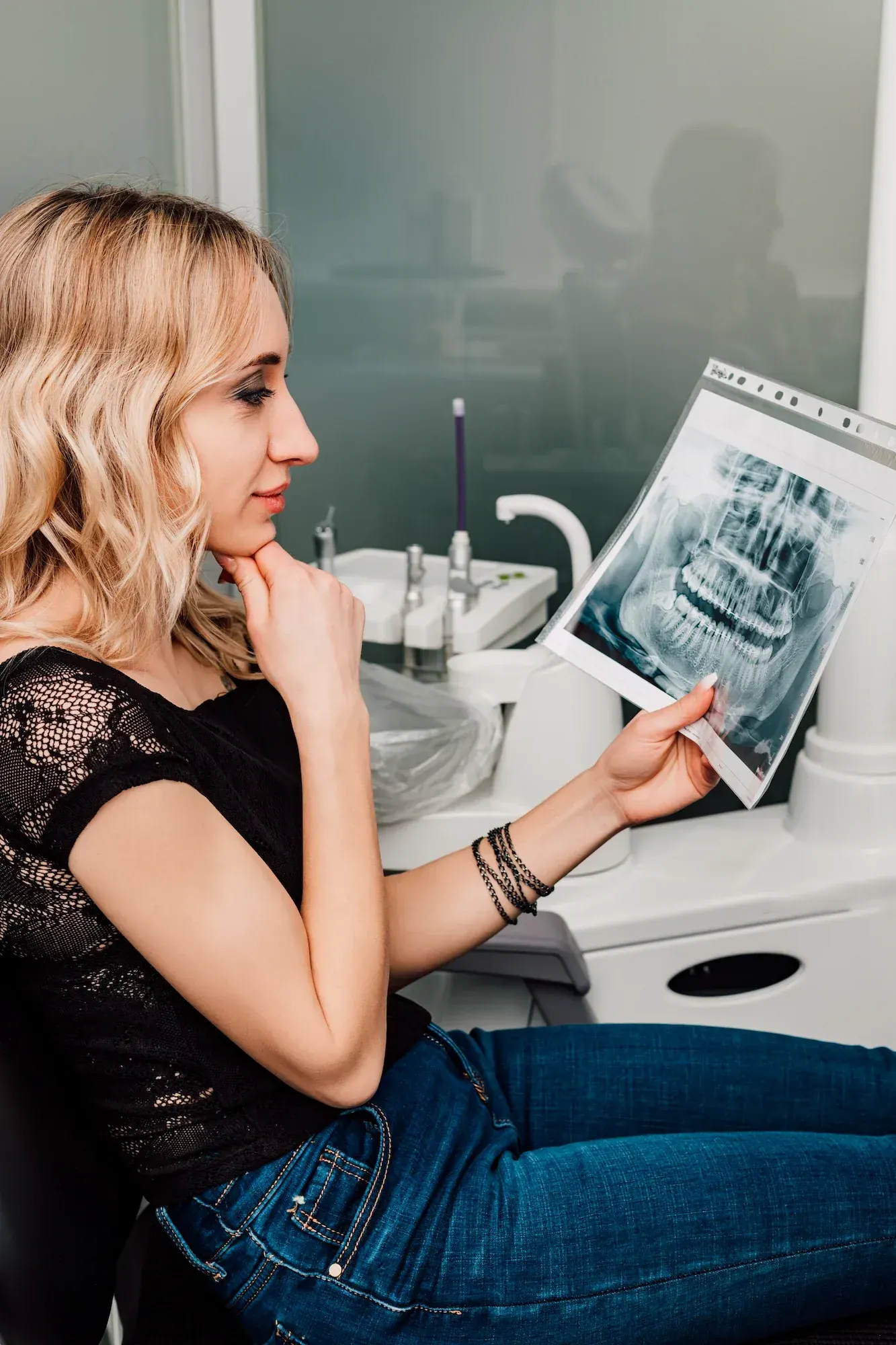
CBCT is not a routine scan, it is recommended only when 2D imaging is not enough and the added 3D detail will change diagnosis, treatment, or surgical safety.
Dr. Cook will always explain exactly why a CBCT is recommended, what it will show, and how the dose compares to other imaging before any scan is performed.
A calm, simple process - you stand or sit in the CBCT unit for a single 15 to 40-second rotation, then review your 3D images with Dr. Cook chairside immediately after.
Dr. Cook reviews your medical history, any recent imaging, and the specific reason a 3D scan is needed before approving the CBCT order.
Our team places a lead apron and thyroid collar, then guides you into the CBCT unit and positions your chin in the rest.
The CBCT arm rotates around your head one time over 15 to 40 seconds while you stay still and breathe normally.
Dr. Cook opens your scan in 3D software, rotates the view, and measures bone, nerves, and sinuses on the chairside monitor with you.
Findings are translated into a clear, conservative implant, surgical, or endodontic plan, with referrals only when truly needed.
CBCT is a focused, low-dose 3D scan, ordered only when its diagnostic value justifies the exposure.
CBCT imaging is safe when used appropriately. The dose is higher than a single 2D dental X-ray but far lower than a medical CT of the head. Dr. Cook follows the ALARA principle and orders a CBCT only when the 3D detail will improve your diagnosis, treatment, or surgical safety.
Sometimes a scan reveals incidental findings in the sinuses or jaw that warrant a referral to an ENT or oral surgeon, and Dr. Cook will walk you through the next step. The exposure itself carries very low risk when imaging is appropriately limited.
Every patient is shielded with a lead apron and thyroid collar. Pregnant patients are typically not imaged with CBCT unless an urgent dental problem outweighs the very low risk, and children receive CBCT only when no lower-dose option will answer the question. If you feel anxious in enclosed spaces, please mention it; the CBCT unit is open and upright.
Transparent CBCT pricing at approximately $300 to $500, frequently bundled into implant and surgical consultations with no referral fees or extra appointments.
A standalone CBCT 3D scan at Cook Family Dentistry runs approximately $300 to $500, and it's often bundled into an implant or surgical consultation rather than billed separately. Because the scan is done in-office, there are no referral fees or extra appointments. Dr. Cook orders a CBCT only when the 3D information will meaningfully guide your care.
Some dental and medical insurance plans cover a portion of CBCT imaging when it's medically necessary, such as for implant planning or complex surgical cases. Our front desk team will verify your benefits and explain any out-of-pocket cost before your scan.
We believe cost should never stand between you and safe, accurate care. When CBCT is part of a larger treatment, we offer:
In-office 3D imaging from a Dawson Academy Fellow and Comprehensive Implant Residency graduate.
Book NowNo referrals or extra appointments for advanced imaging
Comprehensive Implant Residency training behind every plan
Scans ordered only when the diagnostic value justifies the dose
Walk through your scan with Dr. Cook on the monitor
Advanced 3D imaging done in-office, in a single visit
We follow ALARA and scan only when it changes your care
Services Dr. Cook most often pairs with 3D imaging at Cook Family Dentistry.
View All ServicesDigital dental scanners in Santa Rosa Beach, FL. Primescan digital impressions with no messy molds. Book today.
Learn moreIntra-oral cameras in Santa Rosa Beach, FL. In-mouth cameras that show you what the dentist sees. Book today.
Learn moreDental implants in Santa Rosa Beach, FL. Permanent tooth replacement that looks and feels natural. Book a consultation today.
Learn moreAll-on-4 dental implants in Santa Rosa Beach, FL. A full arch of fixed teeth on four implants. Book a consultation today.
Learn moreA regular dental X-ray gives us a flat 2D image of your teeth and bone. A CBCT scan rotates around your head one time and reconstructs hundreds of slices into a true 3D view of your jaw, sinuses, nerves, and airway. Dr. Cook uses CBCT mainly for implants, complex root canals, and surgical planning.
A dental CBCT scan uses more radiation than a single 2D X-ray but far less than a medical CT scan of the head, because the beam is shaped to focus on the dental region. We follow the ALARA principle and only order a CBCT when the 3D information clearly improves your care.
The scan itself takes about 15 to 40 seconds while the arm rotates once around your head. Your total visit, including setup and chairside review with Dr. Cook, is usually 10 to 15 minutes.
No. Our CBCT unit is open and upright. You sit or stand with your chin resting comfortably while the arm rotates around you. The unit is not enclosed, so patients who feel anxious in tight spaces are usually very comfortable.
No. Most routine care uses standard 2D digital X-rays. CBCT is reserved for cases where 3D information will change diagnosis or improve safety, such as implants, full-arch cases, surgical extractions, complex root canals, and airway or TMJ evaluation.
Coverage varies by plan. Some dental insurance plans cover CBCT scans for specific procedures like implants or surgery, while others do not. Our team will verify your benefits before the scan and explain any out of pocket cost in advance.