Nighttime Bruxism
Unconscious grinding during sleep that overloads the joint and wears tooth surfaces.


Calm the clenching, ease the headaches and give your jaw a path forward.

TMJ disorders (TMD) can quietly steal sleep, focus and comfort.
Temporomandibular disorders (TMD), often referred to by the name of the joint itself, the temporomandibular joint (TMJ), affect the joints, muscles and ligaments that move your jaw. The symptoms rarely stay in one place. One week it may feel like a sore jaw, the next like an ear infection, a tension headache or a clicking sound every time you chew. The National Institute of Dental and Craniofacial Research estimates that TMJ disorders (TMD) affect more than 10 million Americans.
At Cook Family Dentistry, Dr. Cook approaches TMJ as a chronic, multifactorial condition that deserves time and a real plan. We listen to the full picture, identify the contributing factors and build a treatment path that starts with the most conservative options first. For many patients, a combination of education, custom mouth guards, Botox for TMJ and Emface is enough to turn the volume down on years of discomfort.

Stress, bite alignment and grinding habits often work together.
TMD symptoms usually result from a stack of small stressors on the TMJ and surrounding muscles, not a single injury. Clenching during stressful work weeks, grinding teeth at night, bite imbalances and old jaw injuries can all overload the system. Over time, the muscles guard, the joint inflames and the tooth wear begins to show.
Identifying the leading cause is the first step toward a treatment plan that actually holds. A simple conversation about your sleep, stress, posture and dental history often points us in the right direction.

Chronic clenching damages teeth, restorations and quality of life.
Many people live with TMD symptoms for years before seeking help, often dismissing the discomfort as stress or aging. The challenge is that grinding and clenching cause real, measurable damage. Enamel flattens, fillings and crowns fracture, gums recede and the muscles stay in a low-grade spasm that fuels headaches and neck pain.
Addressing TMD early protects your existing dental work, helps you sleep better and often reduces the frequency of tension headaches that you may not have connected to your jaw.
Most patients have two or three of these working at once.
Unconscious grinding during sleep that overloads the joint and wears tooth surfaces.
Holding the jaw tight during stress, focus or driving, often without realizing it.
Malocclusion that forces muscles to compensate, leading to fatigue and pain.
Elevated muscle tension that radiates from the jaw into the temples and neck.
Inflammatory or degenerative changes inside the TMJ itself.
Old injuries, whiplash or sports impacts that altered joint mechanics.
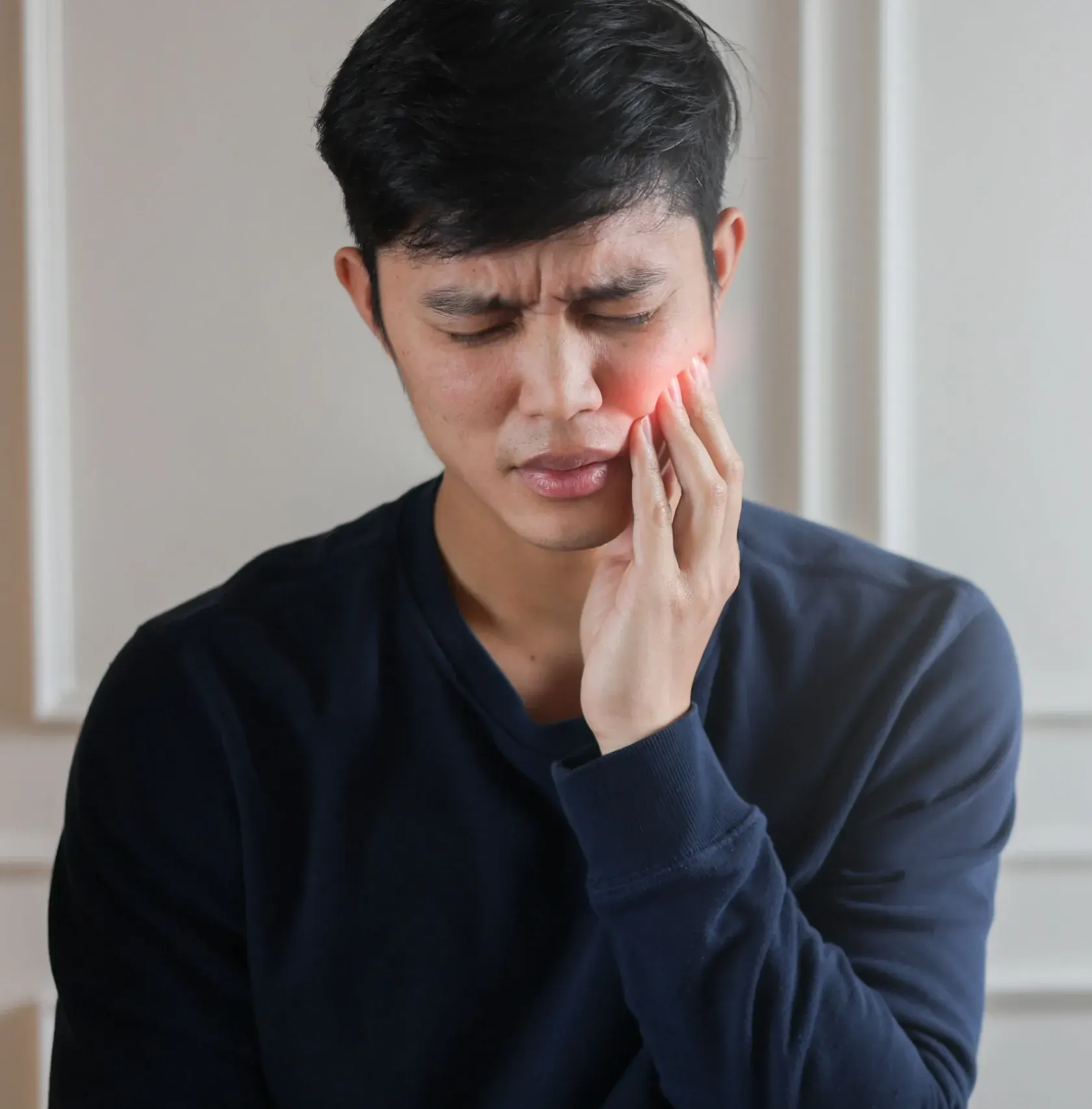
A calm, conservative, layered approach.
Botox for TMJ, Mouth Guards and Emface compared.
| Treatment | Best For | How It Works | Recovery | Duration of Results |
|---|---|---|---|---|
| Botox for TMJ | Clenching, masseter tension and tension headaches | Targeted injections relax overactive jaw muscles | No downtime, mild tenderness possible | Typically 3 to 4 months per treatment |
| Mouth Guards | Nighttime grinding and tooth protection | Custom appliance cushions and separates upper and lower teeth | No downtime, brief adjustment period | Years of protection with proper care |
| Emface | Muscle balancing with mild cosmetic benefit | Non-invasive energy stimulates and balances facial muscles | No downtime, return to activities right away | Series result with maintenance sessions |
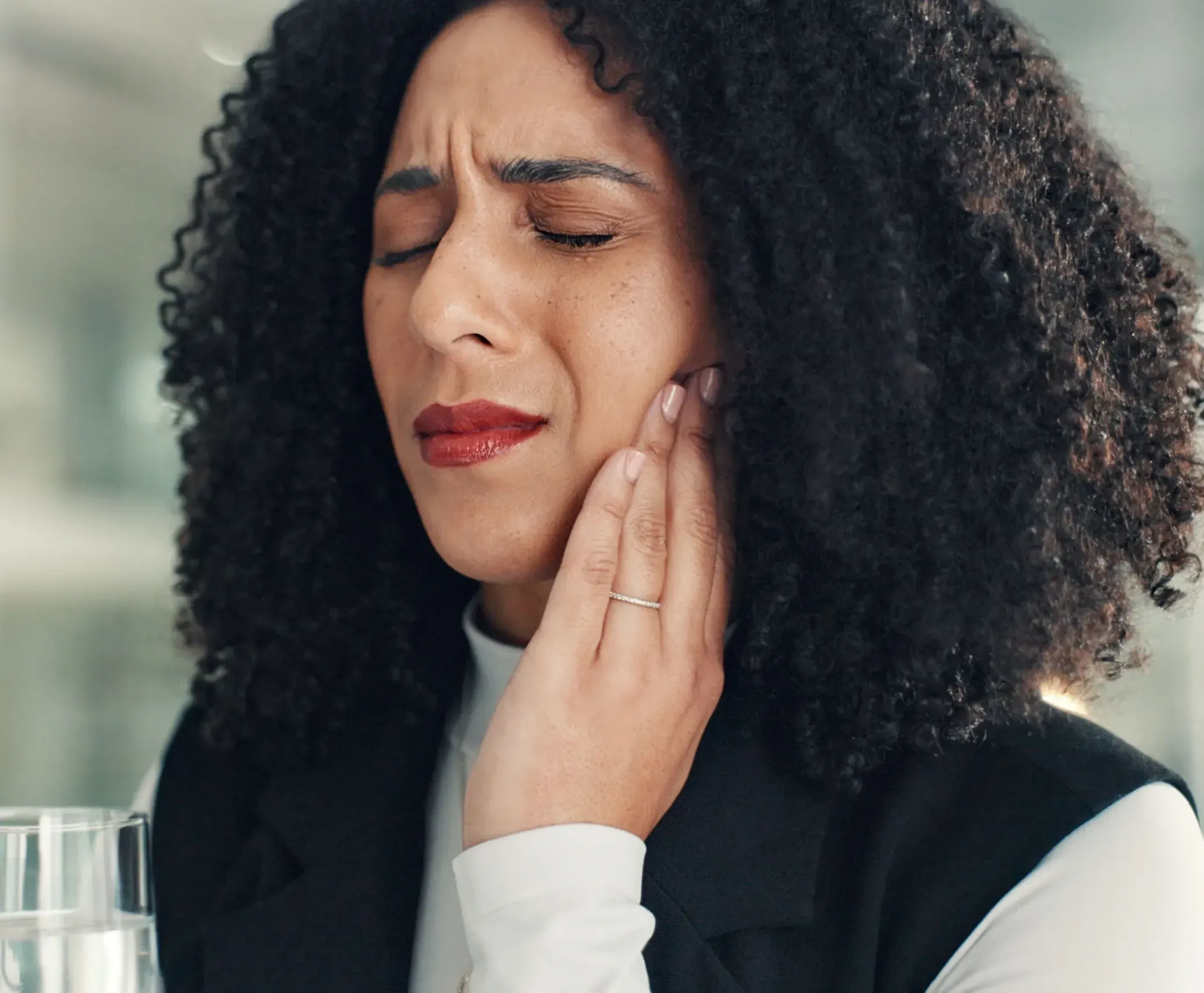
If a few of these sound familiar, an evaluation is worth your time.
A short clinical exam, a review of your symptoms and a look at your bite and tooth wear usually answers this clearly. We palpate the joint and muscles, check your range of motion and discuss your headache, sleep and stress patterns. From there we explain what we see and which treatments make sense for you.
For the vast majority of patients, no. Most TMD cases respond very well to conservative care like a custom night guard, lifestyle adjustments, Botox for the masseter or Emface muscle balancing. Surgery is a last resort and only considered when conservative options have been exhausted. If that is ever the case, we refer to a trusted oral surgeon.
Yes, for the right patients. When the main driver is overactive jaw muscles and clenching, small, targeted doses of Botox in the masseter can reduce muscle force, ease tension headaches and protect teeth from grinding. Studies in oral medicine literature support its use as part of a broader TMD plan.
A custom night guard is built from a scan of your actual teeth, so it fits precisely and stays put while you sleep. It distributes bite forces evenly and is much more comfortable than over the counter versions, which often shift, fall out or create new bite problems.
Absolutely. Stress is one of the most common contributors we see. Many patients clench or grind in response to stress without realizing it, which keeps the jaw muscles in a constant low-grade spasm. Combining a night guard with simple stress-aware habits often makes a big difference.
It varies. Some patients feel relief within a few nights of wearing a custom guard. Botox typically begins reducing muscle tension within one to two weeks. Emface results build over a series. We set realistic expectations at your consultation and check in along the way.